The bottle on your counter is doing more than dressing a salad
Extra-virgin olive oil does not sit in the kitchen as decoration. When it goes down before bed, it drives a hard reset through the body’s most overworked systems: the brain’s waste-clearance network, stiff blood vessels, and aching joints.
That matters when your nights are broken, your blood pressure runs high, and your knees sound like gravel under a car tire. It also matters when you wake up foggy, swollen, and already tired before the day has even started.
The part no one explains is this: the body does not fall apart randomly. It gets clogged, inflamed, and starved of the raw biological fuel it needs to keep cleanup crews moving.
Olive oil hits that bottleneck from three directions at once.
Why sleep gets wrecked first
The first system to feel the shift is the brain. At night, your brain depends on the glymphatic system, a deep-cleaning river that sweeps out debris while you sleep.
Think of it like a city’s overnight sanitation crew. If the streets are blocked, the trash piles up, the signals get muddy, and the whole place starts running on fumes.
Inflammation jams that cleanup. Melatonin gets crowded out, sleep becomes shallow, and you keep waking up as if your nervous system never clocked out.
Olive oil brings in oleocanthal, a fire-smothering compound that presses down on that inflammatory noise. Pair it with tart cherries, and you stack the deck: one ingredient quiets the storm, the other feeds the sleep signal.
That is why people notice fewer restless nights, less 3 a.m. staring at the ceiling, and a morning that feels less like dragging a chain through wet concrete.
Why pressure rises when arteries go rigid
The second place this shows up is your circulation. High blood pressure is not just “numbers on a cuff” — it is stiff pipes fighting against the surge.
Picture a garden hose full of kinks. The pump keeps pushing, the pressure climbs, and every valve down the line takes the hit.
Olive oil’s oleic acid and polyphenols help relax the inner lining of the arteries, the endothelium, so blood can move with less resistance. That means less strain, less squeeze, and less of that heavy, pounding feeling in the chest and head.
For people who wake up with pressure already running hot, this is the difference between starting the day in a clenched fist and starting it with the body finally unclenchin
The ugly contrast is brutal: when the vessels stay tight, the heart has to punch blood through a narrowed tunnel all night long. No wonder the body feels battered by morning.
Why aching joints feel the change too
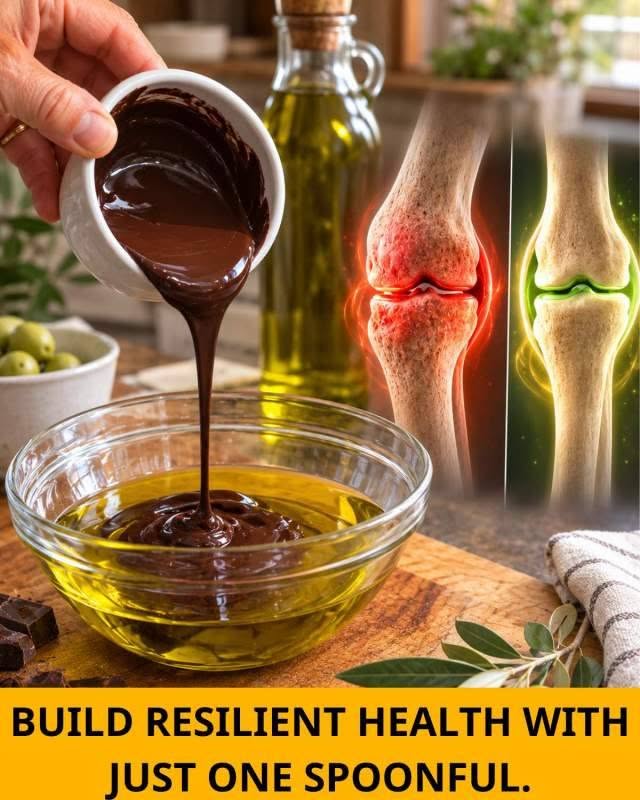
The third place this lands is the joints. Oleocanthal does not just “support comfort”; it interferes with the inflammatory cascade that keeps cartilage under attack.
Think of cartilage like the rubber bumper on a garage door. Once the padding starts wearing thin, every movement becomes a grind, a scrape, a complaint.
That is why knees, hips, hands, and even shoulders can feel like they are full of sandpaper after years of wear and inflammation. The joint is not lazy. It is being chewed up from the inside.
Olive oil helps shut down the signals that keep that damage rolling. People notice less stiffness getting out of bed, less pain when climbing stairs, and less of that sharp reminder every time they stand up from a chair.
And when vitamin C-rich foods enter the picture, collagen production gets better raw material, which is exactly what worn tissue has been begging for.